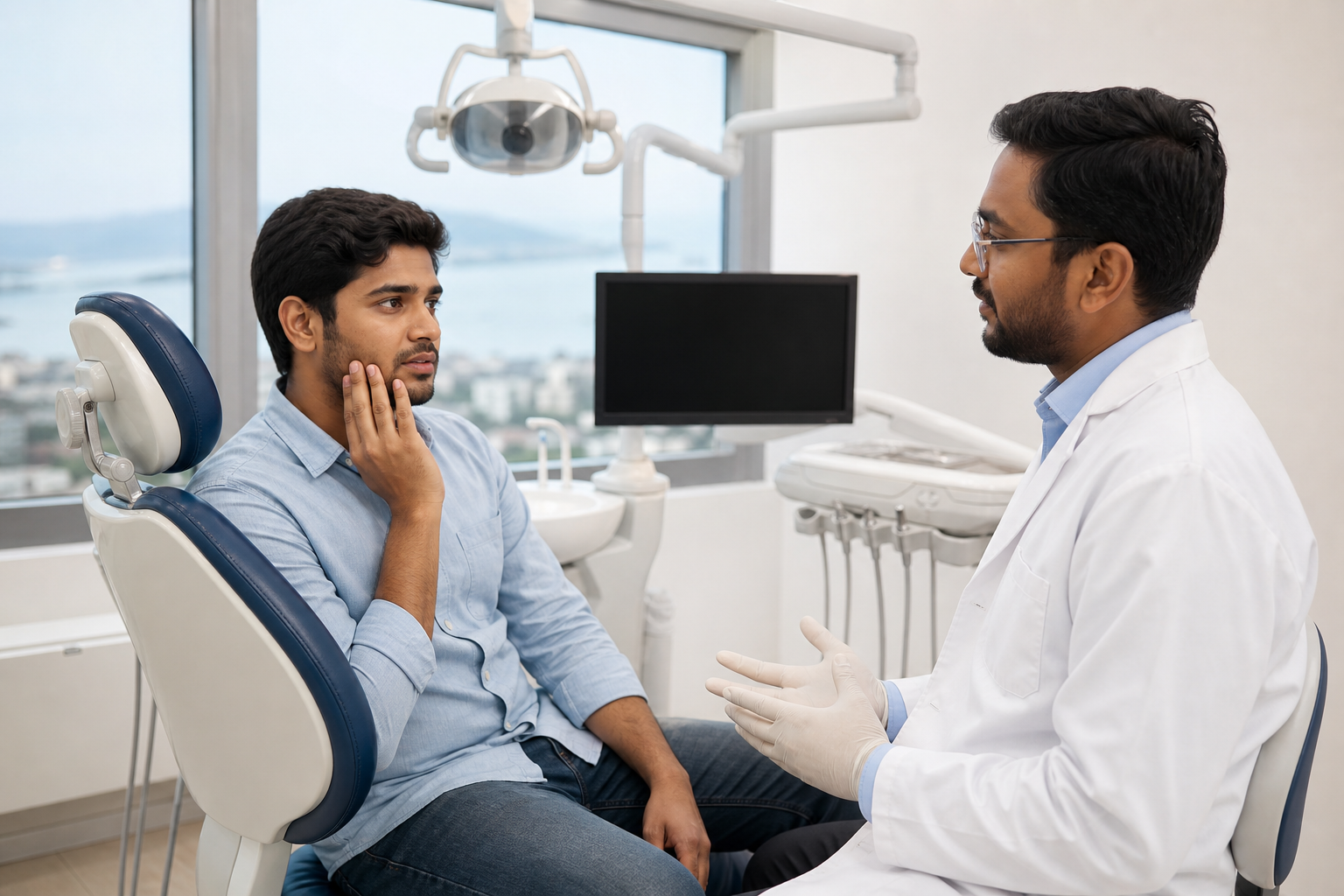
Decay, cracks or trauma can allow bacteria to reach the soft tissue inside a tooth. Root canal treatment may be recommended to remove infection and preserve a tooth that can still be restored.
Symptoms that need attention
- Toothache that persists or interrupts sleep
- Lingering sensitivity to hot or cold
- Pain when biting or chewing
- Swelling of the gum, face or jaw
- A pimple-like spot on the gum
- A darkened tooth after injury
Why pain may disappear
An infected tooth can sometimes stop hurting when the nerve tissue loses vitality. This does not necessarily mean the infection has resolved. Swelling, tenderness or an abscess can develop later.
What happens at an assessment?
The dentist discusses symptoms, examines the tooth and may use X-rays and vitality tests. Not every toothache needs root canal treatment—gum problems, cracks, decay or bite issues can produce similar symptoms.
When is it urgent?
Seek prompt care for facial swelling, fever, difficulty swallowing or breathing, rapidly worsening pain or swelling near the eye. These symptoms can require urgent medical or dental attention.
What happens inside an infected tooth?
Beneath enamel and dentine is the dental pulp. Deep decay, a crack, repeated dental work or injury can inflame or infect it. When the pulp cannot recover, cleaning and sealing the canal system may help retain the tooth.
Common causes
- Untreated deep decay
- A cracked or fractured tooth
- Dental trauma
- Leakage around a large restoration
- Repeated treatment that irritates the pulp
How treatment is performed
After anaesthesia and isolation, the dentist removes inflamed or infected tissue, shapes and disinfects the canals, then seals them. Treatment may take one or more visits. A strong final restoration may be advised for a weakened back tooth.
Root canal treatment or extraction?
Root canal treatment aims to preserve a restorable natural tooth. A severely fractured tooth or one with inadequate support may not be predictable to save. The dentist should explain prognosis, extraction and replacement implications before you decide.
Recovery and aftercare
- Avoid hard chewing on an unrestored treated tooth.
- Take medicines only as directed.
- Maintain brushing and interdental cleaning.
- Return for the final filling or crown.
- Report worsening pain, fever or swelling.
Frequently asked questions
Does treatment hurt?
Local anaesthesia is used. Some tenderness can occur afterwards, especially when tissues around the root were already inflamed.
Can infection return?
Reinfection is possible if canals are difficult to disinfect, a restoration leaks or a new crack develops. Retreatment may sometimes be considered.
How long can the tooth last?
Longevity depends on remaining structure, fracture risk, final restoration and maintenance; an exact lifespan cannot be promised.
Next steps
For costs, sittings, recovery and crowns, read our complete guide to root canal treatment in Vizag.
Learn about the root canal treatment process or use our contact page to arrange an examination.