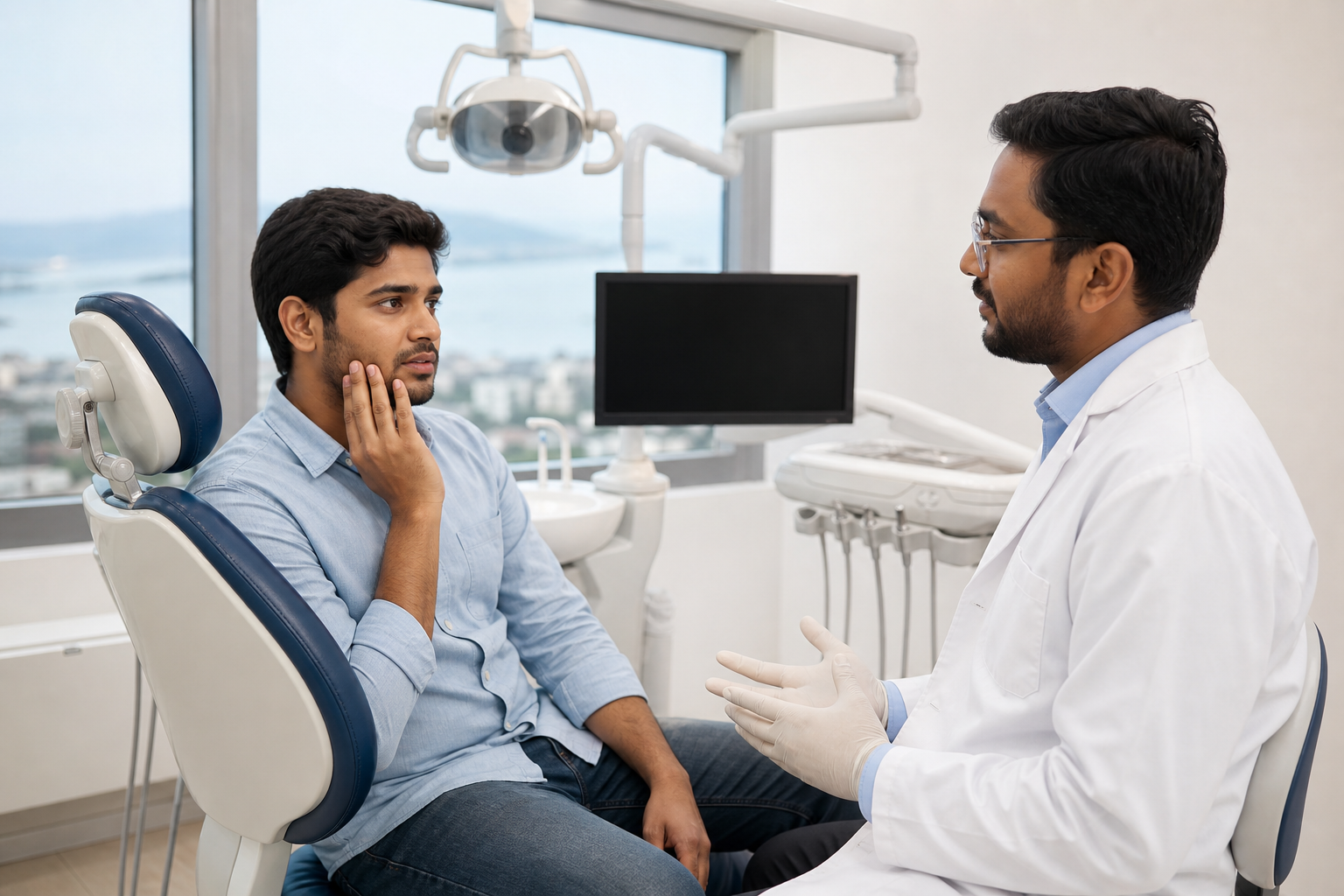
If a tooth hurts when you bite or stays sensitive after a hot drink, you may be wondering whether you need root canal treatment (RCT). The answer starts with an examination. A symptom alone cannot tell you whether a filling, root canal or another treatment is appropriate.
This guide explains what to ask when considering root canal treatment at Laasya Dental in Visakhapatnam, including the complete cost, appointment plan and restoration after treatment.
How much does root canal treatment cost in Vizag?
There is no single fee that applies to every tooth. Your total should account for the root canal and the final restoration. Laasya Dental’s current RCT and crown fees are available on enquiry; this guide does not provide a confirmed clinic price list. Request an assessment and an itemised estimate before deciding.
The tooth involved and the difficulty of treatment affect the fee. A molar can require more work than a front tooth; treating a tooth again can also involve a different plan.
| Part of your care | Question to ask |
|---|---|
| Consultation and imaging | Are the examination and required X-rays included? |
| Root canal procedure | Is this a first treatment or retreatment, and does the quote cover all planned sittings? |
| Tooth build-up | Will a separate core build-up or post be needed, and what will it cost? |
| Final filling or crown | Is it included? If a crown is advised, which material is quoted? |
| Follow-up and medicines | What is covered, what is billed separately, and what could change the estimate? |
When comparing quotes in Vizag, ask each clinic to price the same complete plan. An RCT-only quote and an RCT-plus-crown quote do not cover the same work. Ask for the tooth number, proposed restoration and expected total in writing. If you have insurance, confirm dental benefits and exclusions with your insurer.
What symptoms suggest you may need RCT?
Warning signs include pain when chewing, sensitivity that lingers after hot or cold food, tender or swollen gums, and a recurring pimple on the gum. Deep decay, a crack or an injury can damage the pulp inside a tooth. These are reasons to arrange an examination, not a diagnosis by themselves.
Tell your dentist when the pain started, what triggers it and whether it wakes you at night. Mention recent injuries, previous fillings and any swelling. Bring earlier X-rays if available. You can also read our guide to root canal warning signs.
The dentist examines the tooth and surrounding tissues and may use X-rays and tests of the pulp’s response. Some teeth can be managed with a dental filling; others need treatment inside the roots. Ask the dentist to explain the findings and whether the tooth can be predictably restored.
Root canal procedure: what happens at each stage?
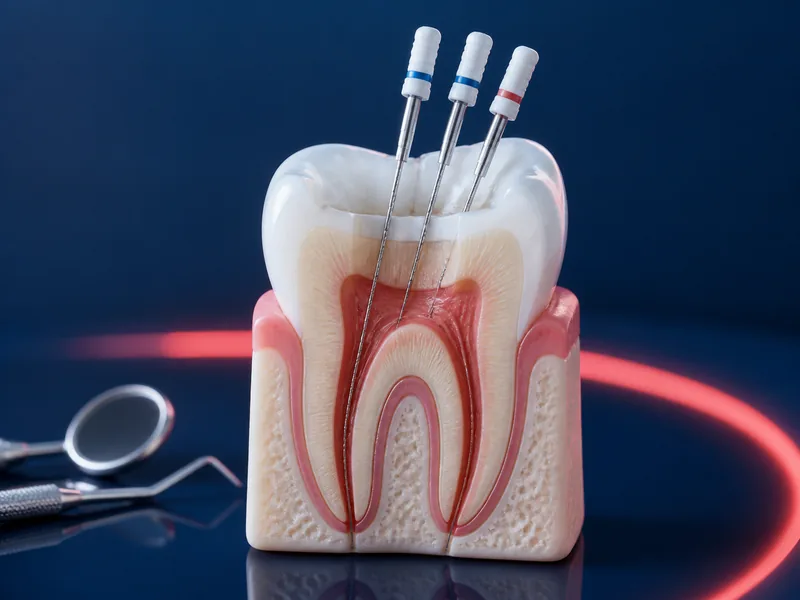
- Assessment and planning. The dentist identifies the affected tooth, reviews the images and discusses whether saving it is suitable.
- Numbing and isolation. Local anaesthetic numbs the area. A dental dam isolates the tooth during treatment.
- Cleaning the canals. An opening allows the dentist to remove the damaged pulp. Small instruments and disinfecting solutions clean and shape the canals.
- Filling and sealing. Prepared canals are filled and sealed. A temporary filling may protect the tooth between appointments.
- Restoring the tooth. A permanent filling or crown completes the treatment plan. Follow-up checks assess healing.
Ask your dentist which stage is being completed at each visit, particularly if a temporary filling is placed.
Is root canal treatment painful?
Local anaesthesia usually makes treatment comfortable. You may notice pressure or vibration; tell the dentist if you feel pain so they can reassess the anaesthesia. Tenderness afterwards is possible.
If you are anxious, say so before treatment starts. Agree on a hand signal to pause and ask how discomfort will be managed afterwards. Take medicines only as directed for you, and contact the clinic if pain is severe, increases or does not follow the recovery pattern your dentist described.
How many sittings does RCT take?
Some cases are completed in one sitting; others need two or more. Infection, canal complexity and your tooth’s condition influence the plan. A visit may last around one to two hours, sometimes longer.
Crown preparation and fitting may require additional visits. Ask separately how many visits are planned for the root canal and how many for the restoration. If you are travelling into Dwaraka Nagar, request the expected appointment length before arranging transport or time off.
Recovery after RCT: eating, work and daily care
Many people can return to routine activities the same day. Avoid chewing on the treated tooth until it is permanently restored.
- While numb: wait for sensation to return before eating so you do not accidentally bite your lip or cheek.
- Until the tooth is restored: choose soft foods such as idli, curd rice or scrambled eggs; avoid hard or sticky foods on that tooth.
- Keep it clean: continue brushing and cleaning between teeth, following any specific instructions from your dentist.
- Keep the next appointment: a temporary filling is an intermediate step. Report a loose or lost filling promptly.
Soreness should gradually improve, although the area can take a couple of weeks to settle. Do not wait for a scheduled review if swelling or pain is worsening.
Do you need a crown after root canal treatment?
Back teeth often need crowns because they bear substantial chewing forces. A front tooth with enough remaining structure may be restored differently. The decision depends on the tooth’s position, remaining structure and fracture risk.
Ask why a crown is recommended for your tooth, when it should be fitted and how to protect the tooth until then. Discuss the advantages, limitations and price of each suitable material. A post is a separate decision, so ask whether your estimate includes one only if it is needed. Our crowns and bridges page introduces restoration options.
Benefits of RCT and when extraction is considered
Root canal treatment aims to remove diseased tissue while retaining a natural tooth. Once restored, the tooth can support chewing and preserve your smile. It may avoid the need to replace an extracted tooth. However, a severely damaged or fractured tooth may not be suitable to save.
Ask about the prognosis, not just the procedure. If tooth extraction is recommended, discuss whether replacement is needed and compare the complete plan, including a bridge or dental implant when suitable. RCT is not a lifetime guarantee; ongoing care and a sound restoration matter.
When should you visit a dentist?
Book an examination soon for recurring toothache, lingering sensitivity, pain on biting or a damaged tooth. Persistent symptoms deserve attention even if they temporarily ease.
Seek urgent dental care for facial swelling, fever with dental symptoms or a suspected abscess. Go to an emergency department immediately for difficulty breathing or swallowing, swelling around the eye, or extensive mouth swelling. Do not wait for a routine online appointment.
For other urgent tooth concerns, see our emergency dental care information and call the clinic to check availability.
Frequently asked questions
Does the root canal price include the crown?
It may be quoted separately. Ask for an itemised total covering assessment, imaging, RCT, any build-up and the final filling or crown before starting.
Can every root canal be finished in one sitting?
No. Some teeth can be treated in one visit; others need two or more. The dentist will plan visits around the tooth’s condition and treatment complexity. Crown appointments may be additional.
Can I go to work after RCT?
Many people return to routine activities the same day. Allow for numbness and tenderness, and follow any different instructions if sedation was used.
What if a temporary filling comes out?
Contact your dentist promptly and avoid chewing on that tooth while awaiting advice. The temporary filling protects the tooth between stages of care.
Can I wait until the pain gets worse?
Arrange an assessment for persistent or recurring symptoms. Pain intensity alone cannot tell you how much treatment is needed. Swelling, fever or emergency symptoms need urgent attention.
Discuss your tooth pain and treatment options
Visit Laasya Dental in Dwaraka Nagar, Visakhapatnam, for an assessment. Ask for a plan covering the root canal, final restoration, expected visits and total cost.