Assessment
The dentist examines the area, confirms the diagnosis and discusses laser and non-laser options.
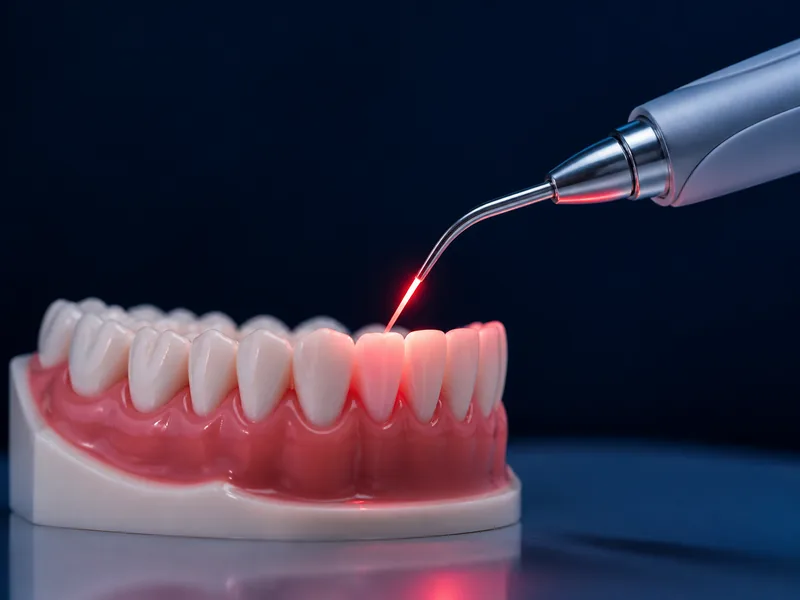
Dental lasers use focused light energy for selected procedures. Depending on the clinical need, they may help reshape gum tissue, manage inflamed soft tissue or support other care with controlled treatment at the target area.
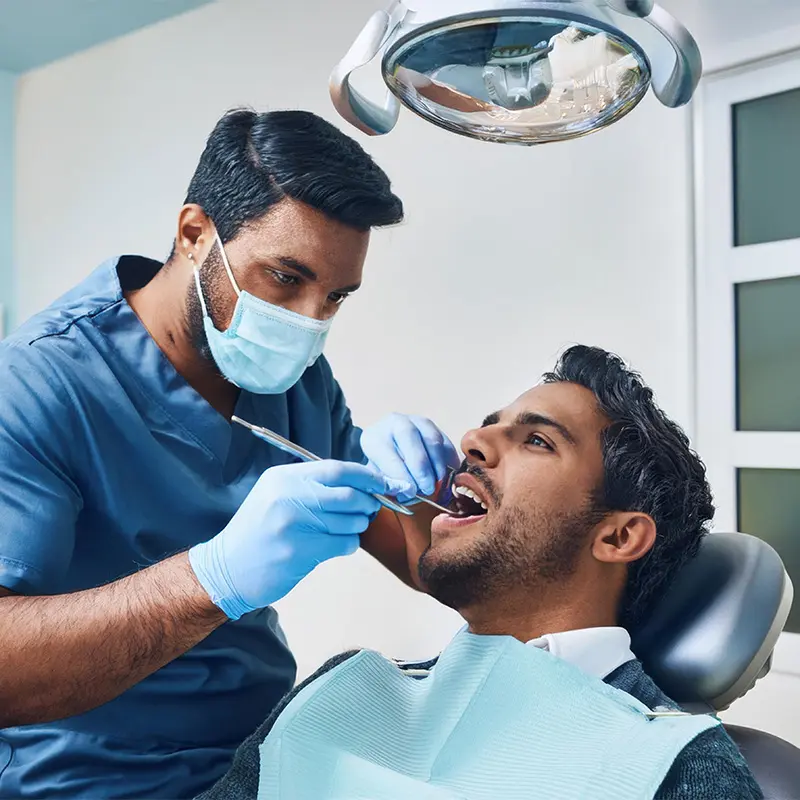
A laser is a clinical tool, not a treatment by itself. Your dentist will recommend it only when it offers a suitable option for your diagnosis.
Laser dentistry is most commonly considered for selected soft-tissue procedures, such as contouring excess gum tissue, exposing more tooth structure, treating a restrictive frenum or supporting periodontal care. The exact use depends on the laser system, tissue involved and treatment goal.
Conventional instruments remain safer or more effective for many procedures. The dentist will compare the available approaches and explain why a laser is—or is not—appropriate.
Adults or children needing a suitable gum or oral soft-tissue procedure may be considered after an examination. Suitability depends on the diagnosis, tissue depth, medical history, medicines, healing factors and whether treatment is close to teeth, bone or restorations.
Typical appointment time: many limited soft-tissue procedures take about 30–60 minutes. More extensive periodontal care may require longer or staged visits.
The dentist examines the area, confirms the diagnosis and discusses laser and non-laser options.
Protective eyewear is provided and local anaesthesia is used when the planned procedure requires it.
The laser setting and technique are selected for the tissue and procedure, with nearby structures protected.
You receive cleaning, eating and symptom guidance plus a review plan when needed.
Benefits vary by procedure and do not mean every case heals without discomfort or complications.
Focused energy can allow controlled treatment of selected soft tissue.
Some procedures may have less bleeding during treatment than conventional cutting.
Technique and anaesthesia are tailored to the procedure and patient.
Tenderness, swelling, sensitivity or temporary colour changes can occur during healing.
Heat injury, delayed healing, infection, scarring or an incomplete result are uncommon but possible.
Further treatment or conventional instruments may still be required to complete care safely.
Patients visit our Dwaraka Nagar clinic from Dondaparthy, Diamond Park, RTC Complex and other areas of Visakhapatnam for assessment of gum and oral soft-tissue concerns. The clinic is at Aarif Shopee on Station Road, making planned reviews convenient for patients travelling through central Vizag.
Adults or children may be considered after an examination. Suitability depends on the diagnosis, tissue depth, medical history, medicines, healing factors and the position of nearby teeth, bone or restorations.
Laser treatment is not automatically better for every dental problem. Conventional instruments may be safer, faster or more predictable in some cases. Your dentist will explain the expected benefit, limitations and alternatives for your specific diagnosis.
Many limited soft-tissue appointments take around 30–60 minutes. Recovery varies by procedure. Follow the cleaning and eating instructions provided, and contact the clinic if pain or swelling increases or bleeding does not settle.
Common questions from patients considering laser dentistry in Visakhapatnam.
Visit Laasya Dental at Aarif Shopee on Station Road in Dwaraka Nagar, Visakhapatnam for an examination and clear discussion of your options.