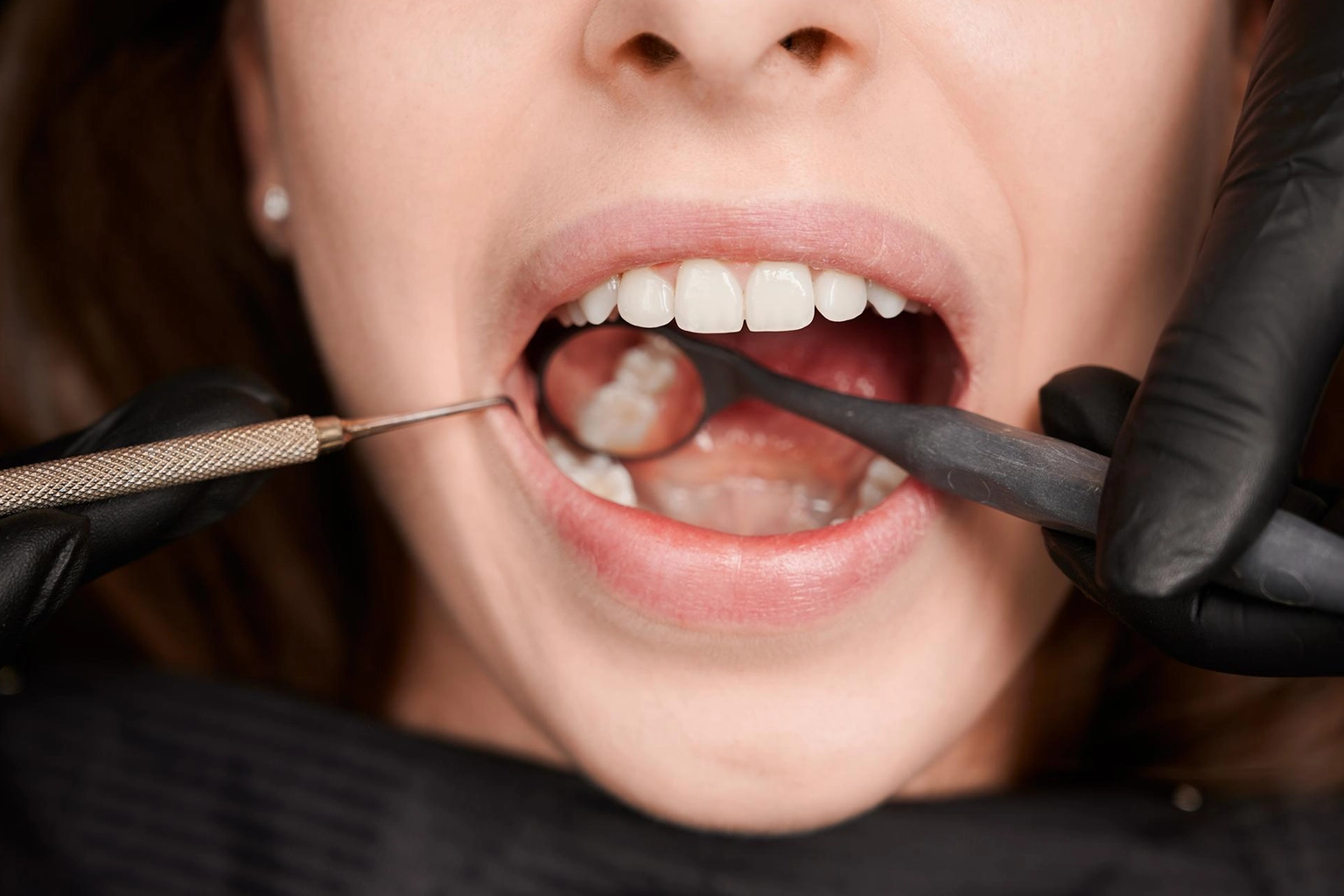
Wisdom tooth pain at the back of your mouth can make eating and opening your jaw uncomfortable. Some wisdom teeth erupt without causing trouble; others become trapped or partly covered by gum. An examination and, when appropriate, an X-ray help a dentist understand what is happening before recommending treatment.
This guide to wisdom tooth removal in Vizag explains common symptoms, how an extraction is planned, factors that affect the fee and practical recovery advice. Symptoms alone do not confirm that a tooth needs to be removed.
1. What is a wisdom tooth, and why can it cause pain?
Wisdom teeth are the third molars at the back of the mouth. They usually emerge in the late teens or early adulthood. If there is not enough room, a tooth may stay under the gum or jawbone, grow at an angle or come through only partway. This is called impaction.
A partly erupted tooth can be difficult to clean. Food and bacteria may collect around the gum, leading to irritation or infection. Crowding, decay, gum disease or pressure on a neighbouring tooth can also cause symptoms. A wisdom tooth that is healthy and not causing disease may simply be monitored during routine dental visits.
2. Seven signs you may need wisdom tooth removal
Arrange a dental assessment if you notice one or more of these signs. They can have other causes, so a dentist needs to examine the area before deciding on treatment.
- Recurring pain at the back of the mouth: discomfort around a wisdom tooth that returns or persists.
- Swollen or tender gum: especially a gum flap over a tooth that has only partly erupted.
- Redness, bleeding or discharge: signs of inflammation around the tooth that should be checked.
- Jaw stiffness or difficulty opening: swelling or soreness can make chewing and opening the mouth uncomfortable.
- Bad breath or an unpleasant taste: debris or infection around a partly erupted tooth may contribute.
- Food repeatedly getting trapped: a position that is hard to clean may increase the risk of decay and gum problems.
- Decay or damage near the wisdom tooth: a dentist may find a cavity, gum disease, or an effect on the neighbouring molar during an examination or on an X-ray.
3. When is wisdom tooth extraction necessary?
A dentist may recommend extraction when examination shows a problem such as repeated infection, decay that cannot be predictably restored, gum disease, a cyst, or damage to a nearby tooth. The position of the tooth, your symptoms, cleaning access and X-ray findings all matter.
Removal is not automatic just because a wisdom tooth is present or impacted. If it is healthy and symptom-free, your dentist may recommend monitoring it instead. Ask what the examination shows, what could happen if you wait, what alternatives are suitable and whether a referral to an oral surgeon is appropriate.
4. How is wisdom tooth removal performed?
The dentist reviews your medical history, examines the tooth and may take X-rays to check its position and nearby structures. The plan depends on whether the tooth has erupted and how close its roots are to important nerves or the sinus.
- Numbing: Local anaesthetic is commonly used. Sedation or general anaesthesia may be considered for selected cases and settings.
- Accessing the tooth: A straightforward extraction may use instruments to loosen and remove an erupted tooth. For an impacted tooth, the clinician may open the gum and, if needed, remove a small amount of bone or divide the tooth into sections.
- Cleaning and closing: The area is cleaned. Stitches may be placed, often dissolving over time, and gauze is used to help a blood clot form.
- Aftercare: You receive instructions about food, cleaning, medicines and follow-up based on the procedure and your health.
Ask who will perform the extraction and whether your case needs specialist care. The procedure and risks should be explained before you decide.
5. Is wisdom tooth extraction painful?
Local anaesthetic is used to numb the area, so you should not feel sharp pain during treatment. You may notice pressure or movement. Tell the dentist if you feel pain so they can assess the numbness and your comfort.
After the anaesthetic wears off, soreness, swelling and jaw stiffness are common for a few days. Your dentist can advise which pain relief is suitable for you, taking account of your medical history and other medicines. A difficult or surgical extraction may need more recovery time than a simple removal.
6. Wisdom tooth removal cost in Vizag: what affects the price?
There is no single fee for every wisdom tooth extraction in Vizag. The total cost depends on the clinical plan, so an examination is needed for an individual estimate. Ask the clinic for a written, itemised quote before treatment.
- Whether the tooth is erupted, partly erupted or impacted, and how difficult it is to access.
- Whether the extraction is straightforward or requires a surgical approach, tooth sectioning or stitches.
- Consultation and imaging required for diagnosis and planning.
- The type of anaesthesia or sedation, if recommended.
- Whether a specialist referral, medicines or follow-up visits are part of the plan.
When comparing quotes, check that they cover the same services and ask what could change the estimate. If you have dental insurance, confirm the benefit and exclusions directly with your insurer. For a personalised wisdom tooth removal cost in Vizag, contact a dentist in Dwaraka Nagar for an assessment.
7. Recovery time and aftercare instructions
Many people return to usual activities the next day after a straightforward extraction, while surgical removal or sedation can mean taking more time to rest. Pain and swelling can last for several days and should generally begin to improve. Recovery varies with the tooth, procedure and individual health.
- Follow the clinic's instructions and take only medicines recommended for you.
- Choose soft foods until chewing is comfortable, and drink enough fluids.
- Keep your mouth clean as directed. Avoid disturbing the socket or blood clot; ask when to restart rinsing and brushing close to the area.
- Avoid smoking while healing, as it can interfere with recovery and increase the risk of complications.
- Rest and avoid strenuous activity for the period your dentist advises.
- If bleeding starts, follow the clinic's gauze instructions. Contact the dentist if it does not settle.
A dry socket can occur if the protective clot is lost or does not form properly. Increasing pain a few days after extraction, sometimes with an unpleasant taste or smell, needs dental advice. Your own post-operative instructions take priority because they are based on your procedure.
8. When should you contact your dentist?
Contact your dentist promptly for bleeding that does not stop, severe or worsening pain or swelling, fever, feeling unwell, or a bad taste together with increasing discomfort. Seek emergency medical help for difficulty breathing or swallowing, or rapidly spreading facial or neck swelling.
If you are unsure whether a symptom is expected, call the clinic that treated you. Do not wait for a routine appointment if symptoms are rapidly worsening.
9. FAQs about wisdom tooth extraction
Does every impacted wisdom tooth need to be removed?
No. A dentist assesses whether it is causing or likely to cause a problem. A healthy, symptom-free tooth may be monitored rather than removed.
How long does wisdom tooth removal take?
It varies with the tooth's position and the complexity of the extraction. The dentist can estimate the appointment time after reviewing your examination and X-ray.
How long is recovery after wisdom tooth removal?
Some people return to normal activities the next day, but soreness, swelling and jaw stiffness can continue for several days and sometimes longer. Recovery depends on the procedure and your individual health.
Can I eat normally after an extraction?
Choose soft foods until chewing feels comfortable and follow your dentist's advice about when to return to your usual diet. Avoid foods that could irritate or become trapped in the socket.
What should I ask about the cost?
Ask for an itemised estimate that explains imaging, the extraction approach, anaesthesia, medicines and follow-up. The fee can only be estimated for your case after an assessment.
10. Visit Laasya Dental in Dwaraka Nagar, Visakhapatnam
If you have wisdom tooth pain or would like an assessment of an impacted wisdom tooth, contact Laasya Dental in Dwaraka Nagar. The dentist can examine the area, review imaging when needed and explain suitable options.
Address: 47-15-11, Aarif Shopee, 2nd Floor, Station Road, Beside V Square, Dwaraka Nagar,
Visakhapatnam, Andhra Pradesh – 530016
Phone: +91
99496 88507
Contact the clinic to ask about an appointment.
Discuss wisdom tooth pain with a dentist
Book an assessment at Laasya Dental in Dwaraka Nagar, Visakhapatnam. The dentist can explain the findings, options and an itemised estimate for your case.