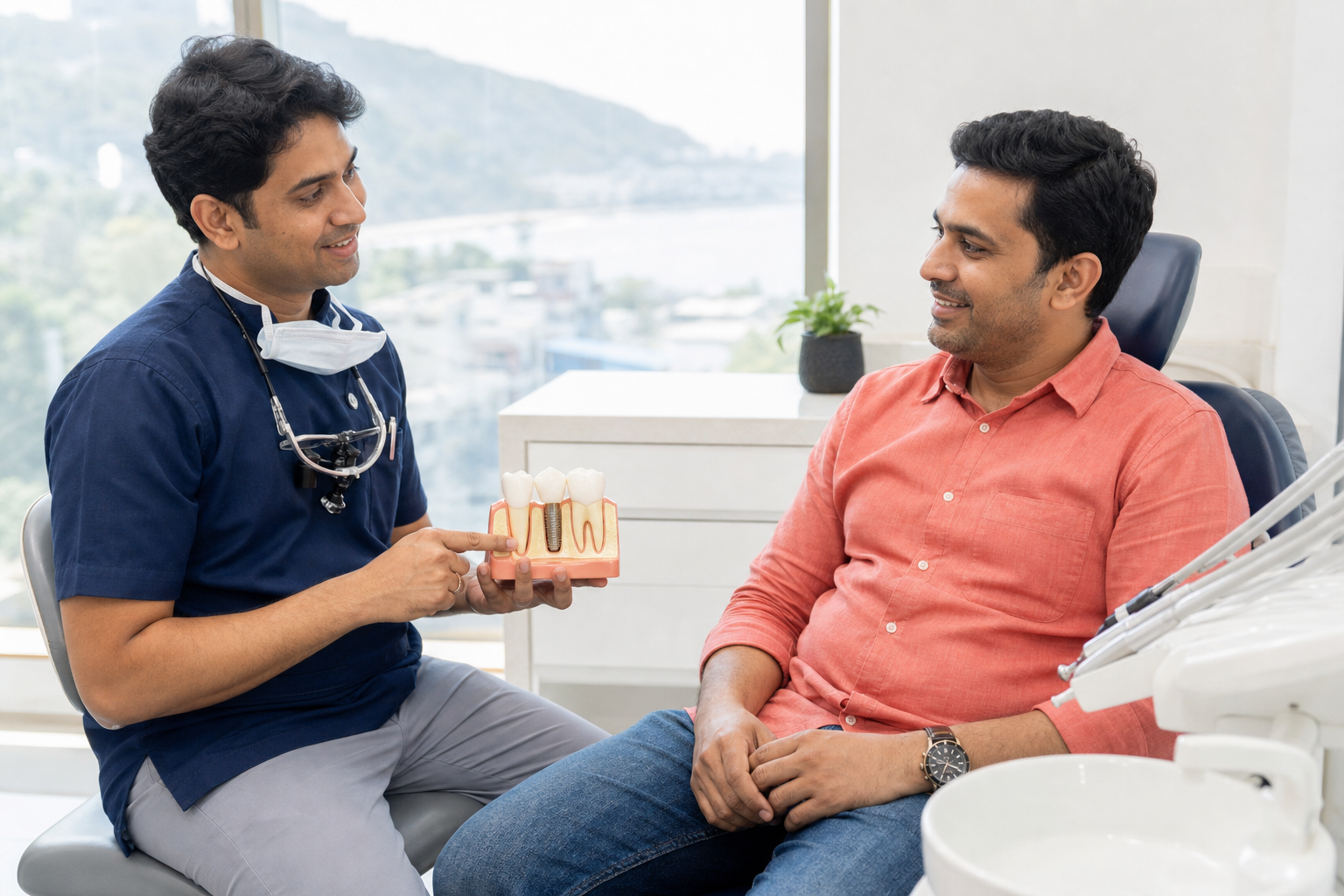
Dental implants can replace missing teeth with restorations supported by the jawbone. Treatment is planned in stages so the dentist can assess health, place the implant safely and allow time for healing.
Assessment and planning
Your dentist reviews your medical history, gums, remaining teeth and bite. X-rays or a 3D scan may be needed to assess bone and nearby structures. Smoking, gum disease, uncontrolled diabetes and some medicines can influence healing and timing.
Implant placement
After local anaesthesia, the implant is placed in the planned position. The appointment commonly takes 45–90 minutes per site, although grafting or complex anatomy can change this. Temporary swelling and tenderness are common.
Healing and the final crown
The bone needs time to integrate with the implant. After healing, an abutment and custom crown are fitted and the bite is checked. The sequence may take several months and varies by individual.
Looking after an implant
- Brush twice daily and clean around the implant.
- Follow dietary advice during early healing.
- Avoid smoking and damaging habits.
- Attend reviews and professional cleaning.
What is a dental implant?
A dental implant is a fixture placed in the jaw to support a replacement tooth. It may support one crown, a bridge or selected dentures. The implant replaces the root; the visible restoration is attached separately after planning and healing.
Who may be suitable?
Potential candidates are adults with healthy gums, adequate bone and cleaning habits that support maintenance. Bone loss, gum disease, smoking, uncontrolled diabetes, tooth grinding, previous radiotherapy and certain medicines may alter timing or suitability. These factors require individual assessment rather than assumptions.
Benefits, limitations and risks
Implants can provide stable chewing support and often avoid preparing adjacent teeth in single-tooth cases. They involve surgery, healing and lifelong maintenance. Risks include infection, delayed healing, failure to integrate, gum recession, loosening, ceramic chipping and injury to nearby structures.
Bone grafting and temporary teeth
If available bone is insufficient, grafting may be discussed before or during placement. A temporary tooth may be possible in selected cases, but immediate loading depends on stability, bite and bone quality.
What affects cost?
Fees vary with the number and location of implants, scans, grafting, temporary restorations, implant components, crown material and complexity. A written plan should separate the surgical and restorative stages.
Frequently asked questions
Is placement painful?
Local anaesthesia is used. Post-operative tenderness and swelling vary, and aftercare is tailored to your health.
How long does treatment take?
Assessment and placement may occur over several visits, followed by healing that commonly takes months. Grafting can extend the sequence.
How long can an implant last?
Longevity depends on healing, cleaning, gum health, bite forces and reviews. No implant can be guaranteed for life.
Discuss your options
Read our complete dental implant treatment guide or contact Laasya Dental for an assessment in Dwaraka Nagar.