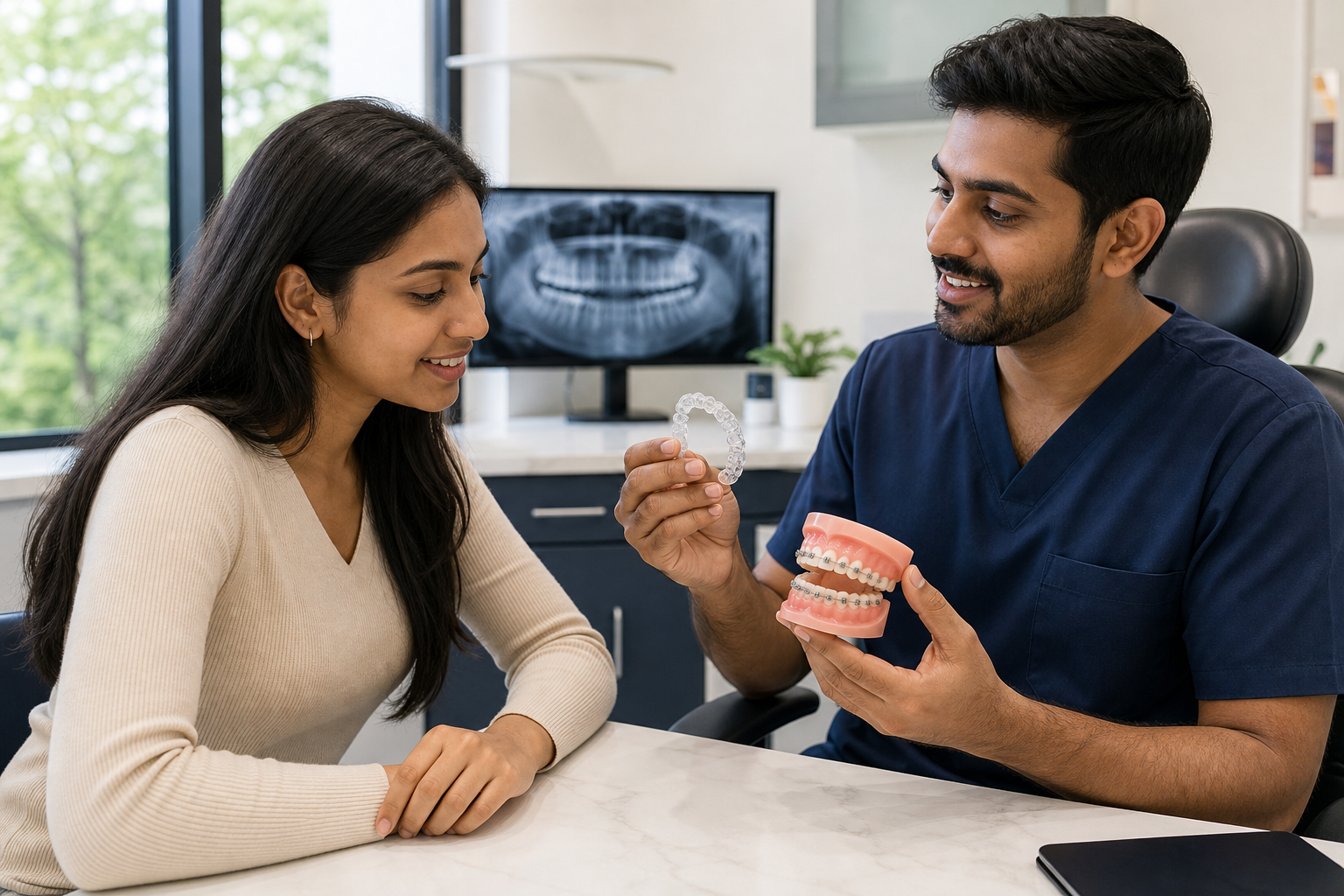
Both braces and clear aligners apply controlled forces to move teeth. The better choice depends on the complexity of movement, oral health, age, daily habits and your ability to follow instructions.
Clear aligners
Aligners are removable and less noticeable. They must usually be worn for the prescribed daily hours and removed for eating and cleaning. Inconsistent wear can delay treatment or compromise the result.
Fixed braces
Braces remain attached to the teeth, so they do not rely on remembering to wear trays. They can manage many complex movements but require careful cleaning around brackets and wires.
Questions to compare
- Is the planned tooth movement suitable for aligners?
- Can you reliably wear and care for removable trays?
- Are you comfortable adapting food and cleaning habits for braces?
- How long is treatment likely to take?
- What retainers will be required afterwards?
What both options require
Healthy teeth and gums, good cleaning, scheduled reviews and retainers after active treatment are important with either approach. Temporary pressure or soreness may occur after adjustments or new aligners.
What orthodontic treatment can address
Orthodontics can improve selected crowding, spacing and bite relationships. Planning considers roots, gums, jaw relationships and stability—not appearance alone. Records may include photographs, scans, X-rays and a bite assessment.
Day-to-day differences
Eating
Aligners are removed for meals and teeth should be cleaned before reinsertion. With braces, hard and sticky foods that can damage attachments need to be limited.
Cleaning
Aligners allow normal cleaning when removed. Braces need extra attention around brackets and wires. Poor hygiene with either option can cause enamel marks or gum inflammation.
Appearance and speech
Aligners are discreet but can temporarily affect speech. Braces remain visible, although ceramic choices may be less noticeable.
Treatment process
- Consultation and health check
- Diagnostic records and planning
- Fitting braces or delivering aligners
- Progress reviews and adjustments
- Completion followed by retainers
Risks and limitations
Possible issues include soreness, gum inflammation, enamel marks, imperfect movement, root shortening and relapse. Aligners may require attachments or refinement trays. Braces can break or irritate the cheeks.
Cost and treatment time
Fees vary with complexity, appliance type, duration and refinement needs. Estimates should clarify reviews, retainers and replacement appliances.
Frequently asked questions
Are aligners faster?
Not automatically. Complexity and cooperation determine timing; poor aligner wear can extend treatment.
Can teenagers use aligners?
Selected teenagers can when growth, tooth development and reliable wear are suitable.
Will teeth stay straight?
Teeth can move throughout life. Retainers and follow-up are normally required after either option.
Compare our clear aligner and braces treatment guides.